Before I return to yesterday's story of finding the heron nest, let me give you some facts about the Great Blue Herons that I hope you will find interesting.
Great Blue Herons are interesting birds! They are the largest heron or egret in North America and the biggest bird in most swampy areas. They live in many places on our earth. During the winter, they mainly lives where they breed. Their population is large and stable: it is great to be able to say that about any species. A great blue is an overall gray-blue color, huge, tall and a wader. It is long legged which helps it wading in water and has a long neck with a spear-like bill that is very handy for catching its prey. It lives by/in ponds, lakes, channels markers, trees, radio towers, rivers, freshwater marshes, salt water shores and streams, pretty much any wetland area. Its diet includes fish and some land animals; small fish, crabs, snakes, crawfish, turtles, rodents, grasshoppers, shellfish and small water birds. It uses 90% of the its active day looking for prey.
In the Northern Hemisphere, it breeds during the months of March through May. The Heron's body changes while it is breeding. The grown heron has a yellow bill and long neck feathers only when it breeds. It also has long and showy plumes on its head, breast and back while it is in the breeding season: kind of like humans showering, applying perfume, getting their hair styled and putting on their best clothes before going to a club looking for their mister or miss right. Like us humans, the male will perform a number of things to attract a female. For example, it flies over its own nest in three hundred and sixty-degree turns: kind of like stalking but in a nice way!!
Nests are the most important things that all birds need to survive. The great blues are no different. The male and female build the nest together. The male will bring the material to the female and she works the material into the nest. The heron usually nests in groups small or large often with other herons or egrets. Its nest are called heronries. New heronries are about 18 inches across but older nests could reach three feet across, as they keep adding to it, much like a human will make renovations to its home. It often lays three to four eggs at a time which two and half inches in diameter. Both the males and females incubate the eggs. I bet all the ladies reading this are thinking lucky bird, the male helps with the incubation.
The heron turns the egg with its bill once every two hours to keep the eggs evenly warm. After twenty five or twenty nine days, the eggs hatch. After the babies are born, both parents take care of them till they can fly and survive on their own. The parents feed them by putting their bills into the young ones' throats and regurgitating partially digested frogs, fish, and other foods. Usually only one or two of the larger chicks live because they can fight for food more easily than the smaller ones. The young ones fly fifty-six to sixty days after their birth and can leave the nest anywhere from five to thirty days after they start flying. Ok, so now lets get back to my story!!

As I wrote yesterday, I heard a chattering and looked up into the treetops in the direction of this noise. I first saw two great blues sitting in a tree but then realized it was two different trees. As I looked, I then saw they were standing in two nests. For a photographer, this is really exciting. I have seen and photographed great blues before and have photographed other birds in their nests but never a great blue in its nest. The reason for the excitement is the possibility of there being chicks still in the nest. As I looked around to find the best spot to photograph, I realized this could be a problem. The best spot seemed to be in the middle of the pond or at the least in the backyards of the houses on the other shore. The middle of the pond was obviously not an option besides the risk of drowning and of wrecking my equipment. This is Florida and ponds could contain alligators. (We were actually told that it was a possibility when we bought our house. We have not seen any yet but do not relish the idea that the first time seeing one happens to be when I am standing in the middle of a pond. I have grown accustomed to having all my limbs with me at all times).
I could not see anyone on the properties across the pond to ask permission so I knew I could not go there. I started looking for the third best option. In nature photography, this is not uncommon. Many times you have to compromise and look for third or forth options. I always want the best picture but I always respect the animals safety, private property and my own safety. If you want to be a nature photographer you need to always keep those values in mind. No image is worth putting the safety of the animal, yourself or the rights of a property owner at risk.
One of the biggest skills that a nature photographer should have is
patience. I have sat for hours waiting for an animal or a sunset/sunrise to be where I need them. This was going to be no different. I could not see any chicks at first and wondered if I was too early or too late. Were the chicks not there? Had they flown off to start their own lives? There was another problem. If you remember I mentioned yesterday that the sun was getting high in the sky creating a harsh, contrasty light: not even close to the kind of light into which I want to be shooting. The sky would be in at least part of my images and there were branches and tree limbs all around the nests. These, plus the harsh light, would cause dark shadows and very bright highlights. Not a good situation to say the least. I stood there looking at the nest thinking about what I should do. Then it happened. I saw a chick's head, not the whole head but definitely the top of one. I cannot explain the excitement that this caused in me. I felt like a kid who has seen Santa Claus putting toys under the tree or the first time a young boy finds a Playboy type magazine hidden somewhere in his house. (Well that covers the complete spectrum of a child's innocence, doesn't it!!!!)
Anyway, I was excited, you get it, right? I started shooting, keeping a close eye on my histogram to hopefully keep my exposure somewhat correct. I knew that I had tree limbs blown out but there was nothing I could do about it. I needed an exposure that would keep the herons exposed and they were for the most part in shadows. Opening up my exposure for them would cause the limbs to be blown out. After awhile, the young chicks came into view, in both nests. I knew I was not capturing images that I wanted, not with this light. I stopped and made the decision to leave and go back early the next morning. I hated to leave but I knew it was best move photographically. I did get a few images but none that I really loved. These were a few of the best and they were not that good. You can see the harsh light. Also, I had taken only one lens. As I have written before, it is a good challenge to take one lens and work with it. I had my 70-200 Nikon VR lens, which is one of my favorites. It is a 2.8 fixed aperture giving me the speed I love in nature, sports or portraits. Unfortunately, with the nest being 110 feet straight up, the lens was really not long enough. I needed our 80-400 lens. I had to crop the images to present the chicks as large as I would want them.


In these two images, you can see the close proximity of the two nests.
I would not usually use these images but thought in all fairness, I should show you some images that are not very good. It happens to all photographers, especially when photographing nature. For those of you who have asked, yes I do get bad shots and here are examples. This is the last time you will see any like this lol. I hope you will notice that by waiting the one day and getting to the site during the early morning light with a longer lens, the images improved. As a nature photographer you need to make the tough call that helps you produce a better image.
The next morning, I was up, had my breakfast, grabbed my equipment and was out the door by 8am.
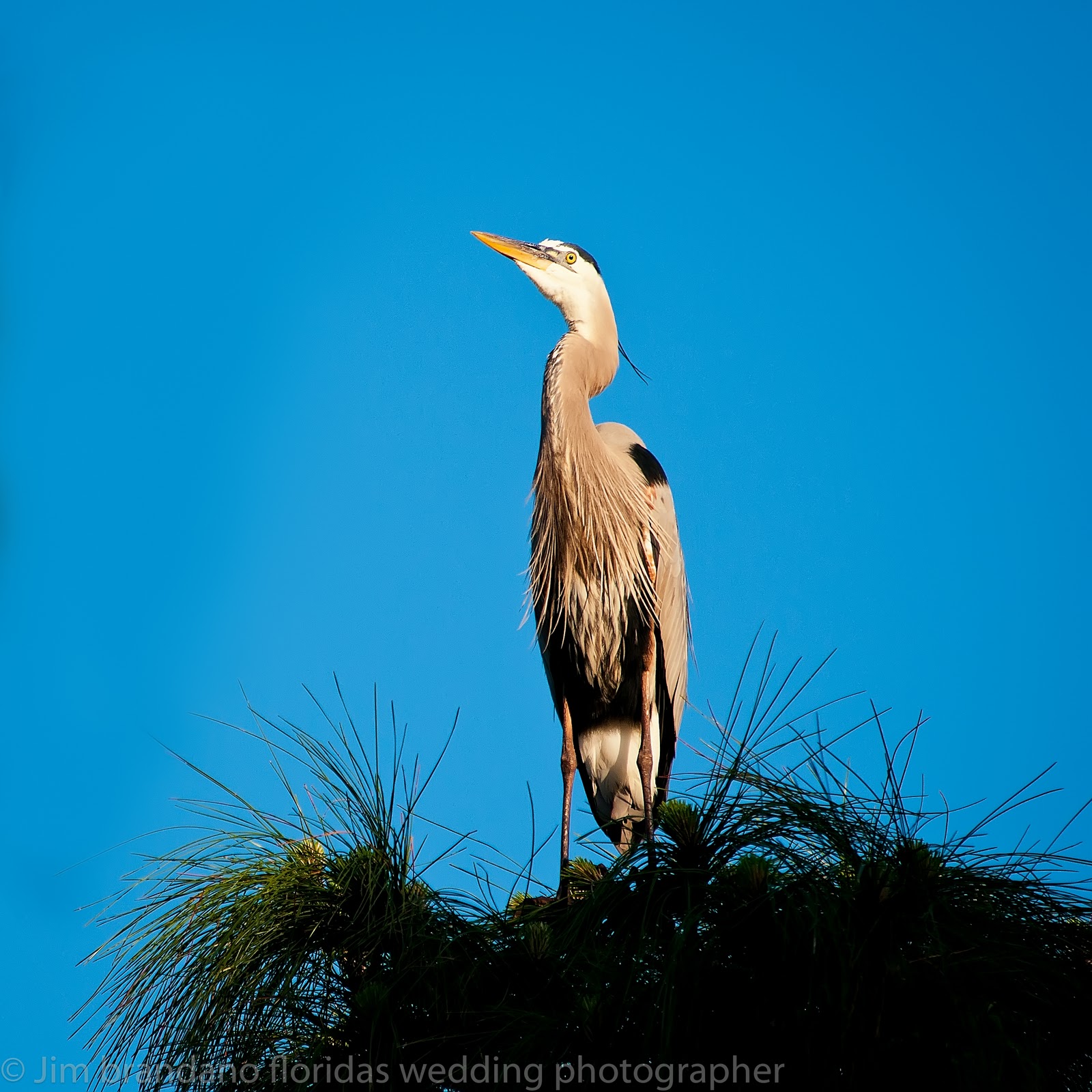
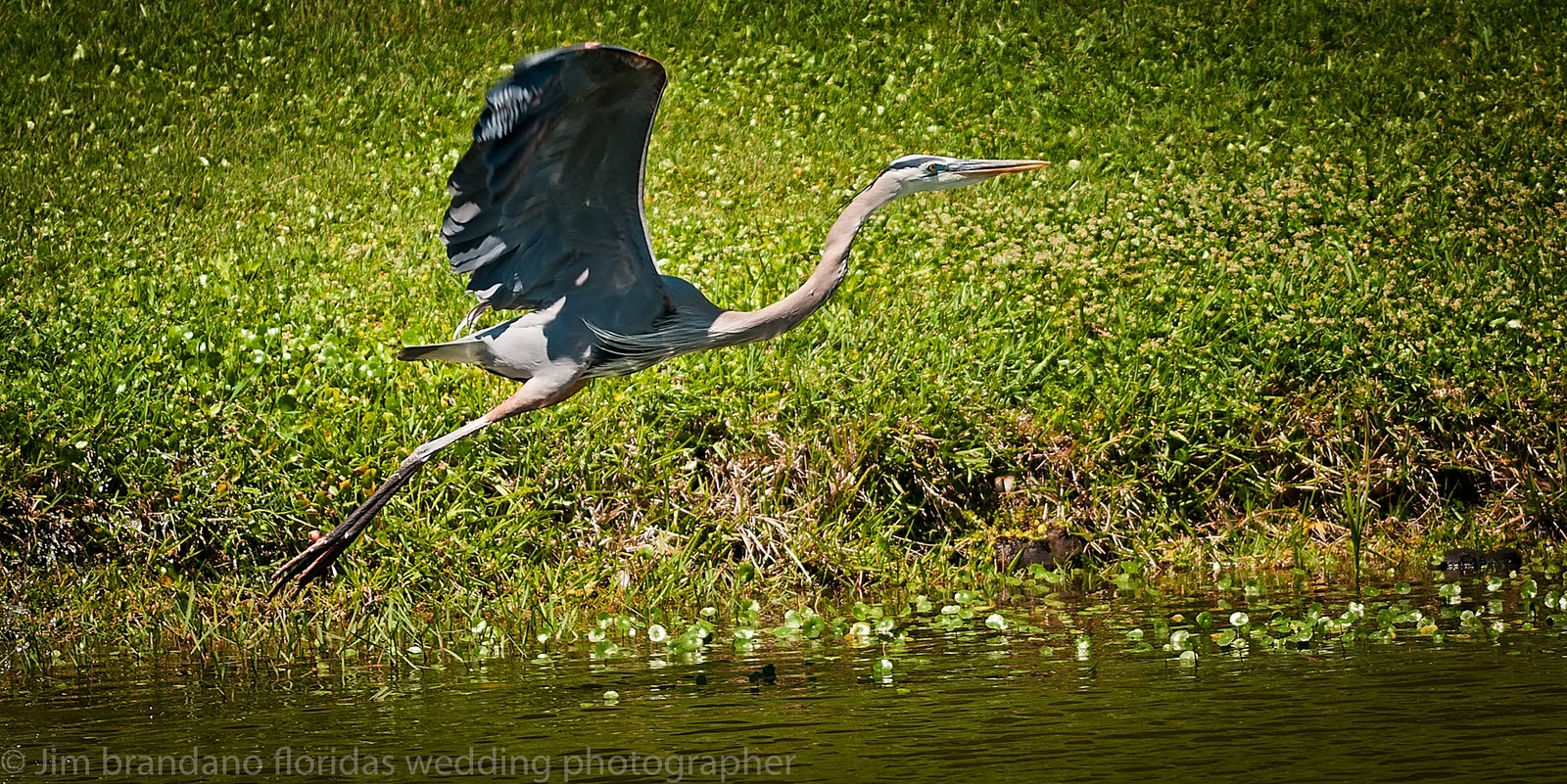
As I was approaching the pond, I saw a great blue flying into the pond area. I parked the car, took out my equipment and before I left the car looked up and saw a blue up on a treetop in the morning light.
I setup and took these images. I was pretty happy with them and I still had not reached my spot or seen the nests or chicks.
You can see the yellow bill and the plumage only present during mating.
Grooming itself.
As you can see, it was grooming itself, something that both of the great blues were doing the whole time I was there and something that caused the hungry chicks to become angry. I left that spot and went around the shrubs to where I could see the nest. I could also hear the chicks because they were very loud. The first nest: these images are from the lower nest.
CHICK WAITING TO BE FED
YOU CAN SEE BOTH CHICKS
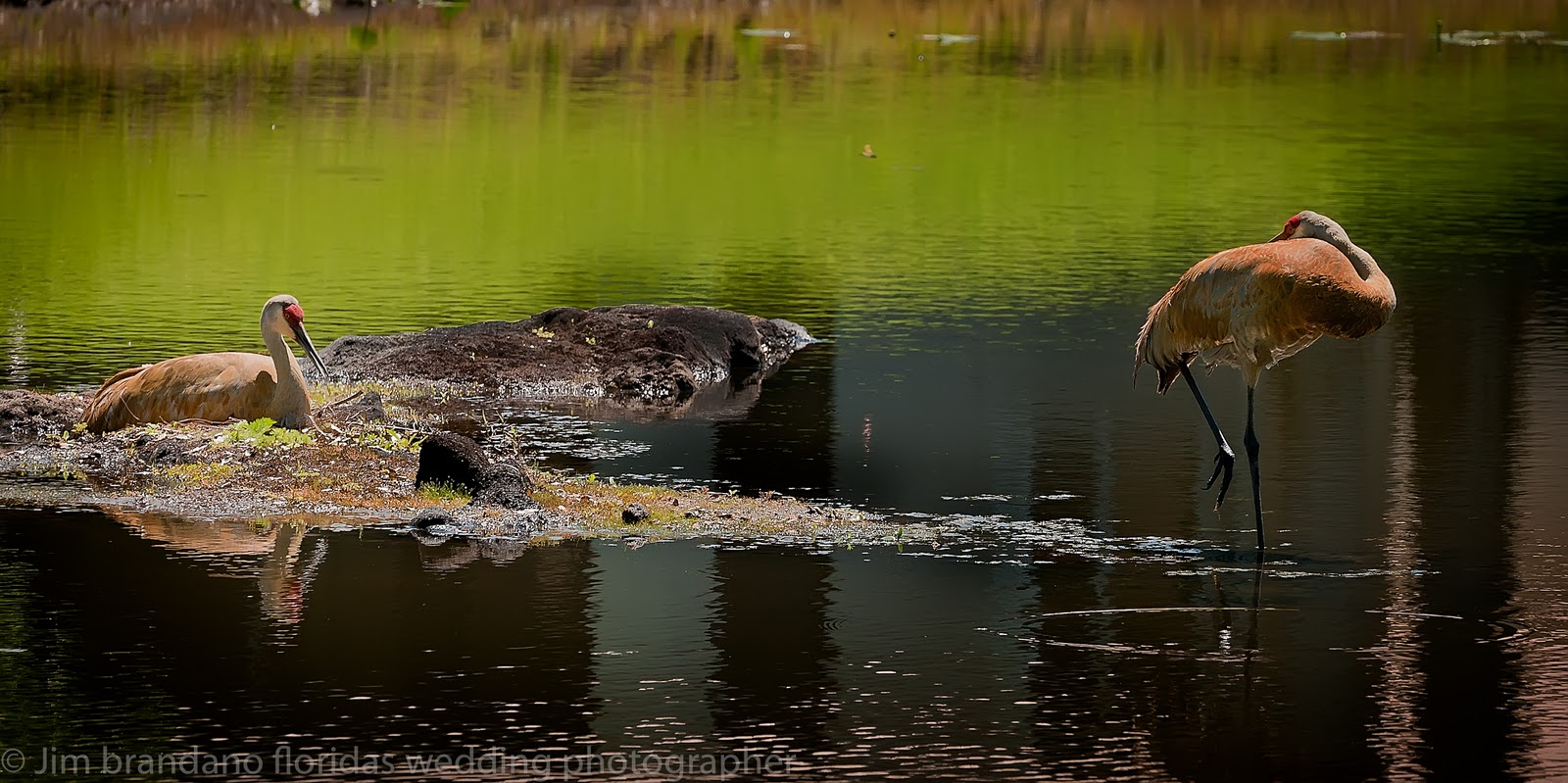
You're probably wondering what these last two images are. Well, I told you a photographer needs patience. What do you do when the chicks lie down and you can't see them and the Great Blue has its back to you? You wait, but I also looked around and started to play. I saw the reflections and thought I would try my hand at some impressionist's paintings, my way. I kind of like them. What about you?
Tomorrow, we have some really fun images of nest two: some really interesting behavior on both the parent and the children. See you then.